
1. Introduction
Choosing the right university is one of the most significant decisions in a student’s academic journey, and the landscape of higher education is shifting rapidly. As we look toward the upcoming academic cycle, the 25 Best Colleges in USA 2026 rankings offer a critical snapshot of institutional excellence, innovation, and student success. These rankings are not merely lists; they are roadmaps for future leaders, researchers, and professionals seeking environments that foster growth.
The 2026 rankings are particularly significant due to the evolving methodologies in evaluation, placing greater emphasis on social mobility, graduate outcomes, and research impact. Whether you are a domestic high school senior or an international applicant, understanding these shifts is vital for a successful application strategy.
Our analysis draws from the most trusted authorities in global education, including the U.S. News & World Report, the QS World University Rankings, and Times Higher Education. These organizations assess thousands of institutions based on academic reputation, faculty resources, and global research impact. By synthesizing data from these diverse sources, we provide a holistic view of the educational landscape.
At USNews.live, we analyze official ranking data, admission trends, and tuition updates to help students make smarter decisions for 2026 applications. Our goal is to simplify complex data sets into actionable insights. This guide covers everything from the Top Universities in USA to specific admission requirements, serving as your all-in-one Study in USA Guide. Whether you are looking for Ivy League prestige or public university value, our USA College Rankings 2026 breakdown will help you identify the institution that aligns perfectly with your academic and career aspirations.
2. Why Trust US News Live for 2026 College Insights?
Navigating the sea of college rankings can be overwhelming. Many websites simply republish lists without context, but at US News Live, we prioritize clarity, accuracy, and student success. Our platform is built on the principles of E-E-A-T (Experience, Expertise, Authoritativeness, and Trustworthiness), ensuring that the information you receive is reliable and actionable.
Data-Driven Analysis: We don’t rely on hearsay. Our editorial team aggregates data directly from the Integrated Postsecondary Education Data System (IPEDS), the Common Data Set (CDS), and official university reports. We analyze acceptance rate trends, yield rates, and early decision statistics to give you a realistic picture of your admission chances.
Simplified Comparison Breakdowns: Comparing a private research university like MIT to a public giant like UCLA can be difficult. We simplify this process with side-by-side comparisons of tuition, student-to-faculty ratios, and campus life, helping you weigh the pros and cons effectively.
Admission Guidance for International Students: The US admission process can be daunting for global applicants. We specialize in breaking down visa requirements, financial aid nuances, and testing policies specifically for international students.
Student-Friendly Resources: We go beyond rankings to offer practical tools. Explore our College comparison tools to filter schools by major or cost. Don’t miss our Admission checklist guide to stay organized during application season, or our comprehensive Scholarship guide to help fund your education.
Regular Updates: The landscape of higher education changes daily, from new test-optional policies to shifts in tuition. US News Live provides real-time updates to ensure you are never working with outdated information.
3. How We Ranked the Best Colleges in USA 2026 (Ranking Methodology)
To curate the definitive list of the top institutions, we utilize a comprehensive methodology that mirrors the rigorous standards of global assessment frameworks. The USA College Rankings 2026 are not determined by a single metric but by a composite score of critical performance indicators.
Academic Reputation: Drawing from the QS World University Rankings methodology, we assess how institutions are perceived by peers. This includes employer reputation surveys, which indicate how well a university prepares graduates for the workforce.
Graduation and Retention Rates: A university’s ability to support students to completion is paramount. We prioritize institutions with high freshman retention rates and 4-year or 6-year graduation rates, a key factor in the U.S. News & World Report framework.
Selectivity and Acceptance Rate: While not the only metric, the academic quality of the incoming class, measured by standardized test scores and high school class rank, plays a role in institutional prestige. We analyze how competitive a school is to help students gauge “reach” vs. “target” schools.
Faculty Resources and Research Funding: Institutions that invest in their faculty and research facilities provide better learning environments. We look at faculty salaries, student-to-faculty ratios, and the volume of research expenditures.
Alumni Salary Outcomes: ROI is essential. We incorporate data from PayScale and the Department of Education’s College Scorecard to analyze the median earnings of graduates 10 years post-enrollment.
International Diversity: In an increasingly globalized world, campuses that attract diverse talent offer richer cultural experiences. We factor in the percentage of international students and global research collaborations.
Our editorial team at USNews.live combines official data with historical trends to simplify rankings for students, ensuring that the numbers reflect the real-world value of a degree.
4. Top 25 Best Colleges in USA 2026
Below is our curated list of the top institutions for the 2026 academic year. We have blended private research powerhouses with leading public universities to provide a balanced view of excellence.
1. Harvard University
- 2026 Ranking Position: #1
- Acceptance Rate: ~3.4%
- Tuition Range: ~$57,000 (before aid)
- Overview: Harvard University remains the gold standard in global higher education. Located in Cambridge, Massachusetts, it boasts the largest academic endowment in the world, fueling cutting-edge research and generous financial aid.
- Popular Programs: Economics, Computer Science, Political Science, Biology.
- Admission Requirements: Harvard looks for “well-rounded class” diversity. Applicants need exceptional transcripts, strong extracurricular leadership, and compelling personal essays. Standardized tests remain optional but encouraged for high scorers.
- Why Choose It: Harvard offers unparalleled networking opportunities, world-renowned faculty, and a brand name that opens doors globally.
2. Stanford University
- 2026 Ranking Position: #2
- Acceptance Rate: ~3.7%
- Tuition Range: ~$58,000
- Overview: Located in the heart of Silicon Valley, Stanford is synonymous with innovation and entrepreneurship. It is the breeding ground for tech giants and startups.
- Popular Programs: Computer Science, Engineering, Business, Medicine.
- Admission Requirements: Stanford values intellectual vitality. Applicants should demonstrate deep curiosity and impact in their chosen fields.
- Why Choose It: If you are interested in tech, engineering, or startups, Stanford’s proximity to industry leaders and its entrepreneurial ecosystem are unmatched.
3. Massachusetts Institute of Technology (MIT)
- 2026 Ranking Position: #3
- Acceptance Rate: ~4.0%
- Tuition Range: ~$58,000
- Overview: MIT is the world’s premier institution for science, engineering, and technology. It is a hub for problem-solvers and inventors dedicated to making a tangible impact on the world.
- Popular Programs: Engineering, Physical Sciences, Computer Science, Mathematics.
- Admission Requirements: MIT requires strong STEM proficiency and a collaborative spirit. The application process is unique, focusing heavily on the match between the student and the institute’s culture.
- Why Choose It: For pure scientific rigor and “hands-on” engineering education, MIT sets the global benchmark.
4. Princeton University
- 2026 Ranking Position: #4
- Acceptance Rate: ~4.5%
- Overview: Princeton offers a tight-knit academic community with a heavy emphasis on undergraduate teaching and independent work.
- Popular Programs: Public Policy, Economics, History, and Mathematics.
- Why Choose It: Its generous no-loan financial aid policy ensures that graduates leave with minimal debt, making it one of the most accessible elite institutions financially.
5. Yale University
- 2026 Ranking Position: #5
- Acceptance Rate: ~4.5%
- Overview: Located in New Haven, Connecticut, Yale is famed for its residential college system and its strength in the arts, humanities, and law.
- Popular Programs: Law, Drama, History, Economics.
- Why Choose It: Yale offers a liberal arts education on a research-university scale, fostering close faculty-student interaction.
6. California Institute of Technology (Caltech)
- 2026 Ranking Position: #6
- Acceptance Rate: ~3.9%
- Overview: Caltech is a small, private research university with a massive output of scientific research, particularly in physics and astronomy.
- Popular Programs: Physics, Chemistry, Engineering, Computer Science.
- Why Choose It: With a 3:1 student-to-faculty ratio, it offers the most personalized STEM education in the world.
7. University of Chicago
- 2026 Ranking Position: #7
- Acceptance Rate: ~5.4%
- Overview: Known for its rigorous academics and “Core Curriculum,” UChicago attracts students who love intense intellectual debate and theoretical learning.
- Popular Programs: Economics, Sociology, Law, Political Science.
- Why Choose It: It is the birthplace of modern economics and offers a distinct, academic-centric campus culture.
8. Columbia University
- 2026 Ranking Position: #8
- Acceptance Rate: ~3.9%
- Overview: Located in New York City, Columbia offers an Ivy League education with direct access to global industries, from finance to media.
- Popular Programs: Journalism, Business, Engineering, and International Relations.
- Why Choose It: The Core Curriculum and NYC location provide a unique blend of traditional liberal arts and real-world experience.
9. University of Pennsylvania (UPenn)
- 2026 Ranking Position: #9
- Acceptance Rate: ~5.8%
- Overview: Founded by Benjamin Franklin, UPenn is known for its interdisciplinary approach, combining liberal arts with pre-professional education.
- Popular Programs: Business (Wharton), Nursing, and Engineering.
- Why Choose It: Home to the Wharton School, it is the top choice for aspiring business leaders.
10. Johns Hopkins University
- 2026 Ranking Position: #10
- Acceptance Rate: ~6.5%
- Overview: A research powerhouse, Johns Hopkins is globally renowned for its medical school and public health programs.
- Popular Programs: Medicine, Public Health, International Studies, Biomedical Engineering.
- Why Choose It: Ideal for students aiming for careers in medicine, health policy, or research.
11. Duke University
- 2026 Ranking Position: #11
- Acceptance Rate: ~6.0%
- Overview: Often called the “Ivy of the South,” Duke combines strong athletics with rigorous academics.
- Popular Programs: Public Policy, Economics, Biology, Law.
- Why Choose It: Duke offers a vibrant campus community and strong ties to the Research Triangle Park.
12. Northwestern University
- 2026 Ranking Position: #12
- Acceptance Rate: ~6.8%
- Overview: Located near Chicago, Northwestern is known for its research initiatives and the prestigious Medill School of Journalism.
- Popular Programs: Journalism, Communication, Theatre, Business.
- Why Choose It: A top pick for creative arts and communication majors seeking a research-university environment.
13. University of California, Berkeley (UC Berkeley)
- 2026 Ranking Position: #13
- Acceptance Rate: ~11.6%
- Overview: The flagship of the UC system, Berkeley is a public Ivy known for activism, research, and academic excellence.
- Popular Programs: Computer Science, Engineering, Political Science, Environmental Science.
- Why Choose It: It offers world-class education at a public university price (for in-state students) and is a top feeder for Silicon Valley.
14. University of California, Los Angeles (UCLA)
- 2026 Ranking Position: #14
- Acceptance Rate: ~8.8%
- Overview: UCLA is a cultural and academic hub, offering top-tier athletics and academics in a prime location.
- Popular Programs: Film, Psychology, Business Economics, and Medicine.
- Why Choose It: It is the most applied-to university in the US, offering unmatched diversity and campus life.
15. University of Michigan
- 2026 Ranking Position: #15
- Acceptance Rate: ~17.7%
- Overview: A top public research university with a strong emphasis on school spirit and professional programs.
- Popular Programs: Engineering, Business (Ross), Law, Medicine.
- Why Choose It: Known for its “Leaders and Best” motto, it offers a classic Big Ten experience with elite academic programs.
16. University of Texas at Austin
- 2026 Ranking Position: #16
- Acceptance Rate: ~29%
- Overview: A massive public university with top-tier programs in business, engineering, and the arts.
- Popular Programs: Business, Engineering, Architecture, Computer Science.
- Why Choose It: It is a powerhouse for tech recruitment and offers a vibrant, growing city environment.
17. New York University (NYU)
- 2026 Ranking Position: #17
- Acceptance Rate: ~12%
- Overview: NYU is integrated into New York City, offering a global network with campuses in Abu Dhabi and Shanghai.
- Popular Programs: Arts, Business, Law, Film.
- Why Choose It: Perfect for students who want an urban campus and access to global industries from day one.
18. Cornell University
- 2026 Ranking Position: #18
- Acceptance Rate: ~7.5%
- Overview: The Ivy League school with the strongest public mission, Cornell hosts seven undergraduate colleges.
- Popular Programs: Engineering, Hotel Administration, Architecture, and Agriculture.
- Why Choose It: It offers the most diverse academic menu of any Ivy, from hospitality to high-tech engineering.
19. Brown University
- 2026 Ranking Position: #19
- Acceptance Rate: ~5.0%
- Overview: Brown is famous for its “Open Curriculum,” allowing students to design their own course of study.
- Popular Programs: Computer Science, Biology, and International Relations.
- Why Choose It: The best choice for independent thinkers who want flexibility in their education.
20. Rice University
- 2026 Ranking Position: #20
- Acceptance Rate: ~9%
- Overview: A private research university in Houston known for its strong engineering and science programs and collaborative culture.
- Popular Programs: Architecture, Engineering, Music, Science.
- Why Choose It: Rice offers small class sizes and a residential college system similar to Oxford/Cambridge.
21. Vanderbilt University
- 2026 Ranking Position: #21
- Acceptance Rate: ~6.1%
- Overview: Located in Nashville, Vanderbilt blends a liberal arts college feel with research university resources.
- Popular Programs: Education, Music, Medicine, Economics.
- Why Choose It: Known for high student happiness and a beautiful campus.
22. University of Notre Dame
- 2026 Ranking Position: #22
- Acceptance Rate: ~12%
- Overview: A Catholic research university known for its tradition, community, and undergraduate focus.
- Popular Programs: Business, Architecture, Political Science, and Theology.
- Why Choose It: Ideal for students seeking a values-based education with strong alumni loyalty.
23. Washington University in St. Louis
- 2026 Ranking Position: #23
- Acceptance Rate: ~11%
- Overview: WashU is distinguished by its dedication to student support and world-class medical research.
- Popular Programs: Medicine, Social Work, Business, Architecture.
- Why Choose It: A top choice for pre-med students due to its affiliation with a top medical center.
24. Emory University
- 2026 Ranking Position: #24
- Acceptance Rate: ~10.6%
- Overview: Located in Atlanta, Emory is known for its healthcare research and liberal arts strength.
- Popular Programs: Business, Nursing, Public Health, Pre-Med.
- Why Choose It: Offers a small-college feel with access to a major metropolitan hub.
25. University of Virginia
- 2026 Ranking Position: #25
- Acceptance Rate: ~16%
- Overview: Founded by Thomas Jefferson, UVA is a public Ivy League known for its historic campus and honor code.
- Popular Programs: Business, English, History, and Architecture.
- Why Choose It: A leader in public education, offering a blend of tradition and high academic standards.

5. Complete Admission Guide for USA Colleges 2026
Navigating the admission process for the Best Colleges in USA 2026 requires strategic planning. The landscape continues to evolve, with standardized testing policies and holistic review processes shifting annually.
Undergraduate Admissions
GPA Requirements: Academic performance remains the most important factor. For Top 25 colleges, a GPA of 3.8 to 4.0 (unweighted) is standard. However, admissions officers look at course rigor; taking AP, IB, or Dual Enrollment courses is crucial to demonstrating college readiness.
SAT/ACT Trends: The “test-optional” policy, which gained traction during the pandemic, remains in place for many institutions in 2026. However, for highly selective schools like MIT or Georgetown, standardized tests are required. For others, submitting a strong score (1500+ SAT or 33+ ACT) can boost your application, while lower scores can be withheld.
IELTS/TOEFL for International Students: Proficiency in English is non-negotiable. Most top universities require a minimum TOEFL score of 100 (internet-based) or an IELTS score of 7.0 or higher. The Duolingo English Test (DET) is also widely accepted, offering a convenient online alternative.
Personal Statement: This is your voice in the application. The 2026 prompts, including the Common App prompts, ask for stories of personal growth, challenges overcome, or unique perspectives. Avoid clichés; focus on specific, introspective narratives that show your character.
Recommendation Letters: You will typically need two teacher recommendations (preferably from core academic subjects) and one counselor recommendation. Choose teachers who know you well and can speak to your intellectual curiosity, not just your grades.
Graduate Admissions
GRE/GMAT: For graduate programs, the GRE remains standard for many disciplines, while the GMAT is the benchmark for business schools. Some MBA programs are moving toward test-optional or GRE-waiver policies for experienced professionals.
SOP and Resume: The Statement of Purpose (SOP) must articulate your research interests and career goals clearly. Your resume should highlight relevant work experience, internships, and specific technical skills.
Research Experience: For STEM and PhD programs, prior research experience is often the deciding factor. Publications or significant project involvement can compensate for lower GPAs.
Application Platforms
Most students apply via the Common App, accepted by over 1,000 colleges. The Coalition Application is another popular platform used by schools like the University of Washington. Always check if your target school has a Direct Portal for specific applications.
6. Tuition Fees & Scholarships in USA
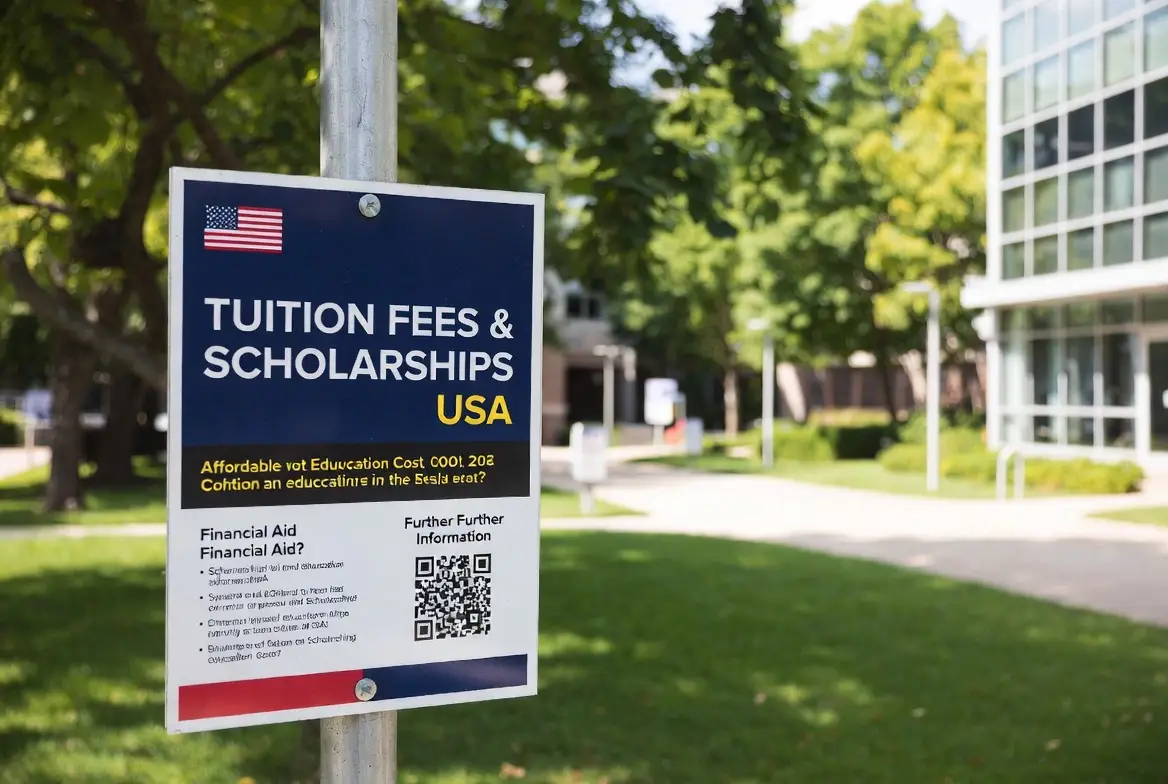
Understanding the Cost to study in USA 2026 is essential for financial planning. The gap between public and private university costs remains significant.
Public vs Private Tuition: Public universities (like UCLA or UMich) receive state funding, offering lower tuition for in-state residents (averaging $10,000–$15,000). Out-of-state and international students pay significantly higher rates ($35,000–$45,000). Private universities (like Harvard or Stanford) charge a flat rate regardless of residency, typically averaging $58,000–$65,000 per year for tuition alone.
Need-Based Aid: Elite private institutions often offer the most generous need-based aid. Schools like Princeton and Harvard meet 100% of demonstrated need without requiring loans. Use the “Net Price Calculator” on every university’s website to estimate your actual cost after aid.
Merit Scholarships: While Ivy League schools rarely offer merit scholarships, many other private universities and almost all public universities offer merit-based awards to attract top talent.
Scholarships for International Students USA: Funding is more limited for international students, but it exists. Look for university-specific scholarships (e.g., the #YouAreWelcomeHere scholarship) and external programs like the Fulbright Foreign Student Program.
7. Best Colleges in the USA for International Students
The USA remains the top destination for global talent, but choosing the right fit goes beyond rankings.
F-1 Visa Process: Once admitted, you will receive an I-20 form to apply for the F-1 student visa. This process requires proof of financial support for at least one year of study and living expenses.
CPT & OPT: International students should look for schools with strong career services that understand Curricular Practical Training (CPT) and Optional Practical Training (OPT). STEM-designated degrees allow for a 3-year OPT extension, making universities like MIT, Stanford, and Berkeley highly attractive for long-term career goals.
Campus Diversity: Institutions like NYU, Columbia, and USC have some of the highest percentages of international students, offering robust support systems, cultural organizations, and a welcoming environment.
8. College Comparison Table (Featured Snippet Target)
You can explore deeper comparison insights and updated statistics on USNews.live.
9. Optimize Your Application Documents
In the rush to meet deadlines and perfect essays, students often overlook a technical hurdle that can derail an application: document file sizes.
The Upload Limit Problem: Most college application portals (Common App, Coalition, and university-specific portals) have strict upload limits for supplemental materials. Portfolios, transcripts, and passport scans are often rejected because the file size exceeds the 2MB or 5MB limit.
Why File Compression Matters: Large, high-resolution images of artwork or scanned official transcripts can be difficult to compress without losing readability. Failing to reduce file size can lead to submission errors right before the deadline, a stressful scenario no student wants to face.
Secure Compression Tool: To prevent upload errors, use the free Image Compressor Tool available on US News Live. This tool allows you to quickly reduce the size of your passport photos, transcript scans, and portfolio images without compromising the quality necessary for admission officers to read them.
Privacy and Format Support: The tool supports JPEG, PNG, WebP, GIF, and SVG formats. All compression happens directly inside your browser, ensuring file security and privacy; your sensitive documents are never uploaded to an external server. This is an essential step for a smooth application submission process.
10. FAQs (Schema Optimized)
What is the #1 college in USA 2026?
Based on aggregated data from US News and QS, Harvard University and Stanford University consistently compete for the #1 spot, with Harvard often holding the slight edge in academic reputation and alumni outcomes.
Which college is hardest to get into?
California Institute of Technology (Caltech) and Harvard University typically vie for the lowest acceptance rate, often falling between 3.0% and 3.9%.
How much GPA is required for top colleges?
For the Top 25 universities, a weighted GPA of 3.8 to 4.0 is standard. Admitted students usually represent the top 10% of their high school graduating class.
What is the average tuition fee for US colleges in 2026?
Average tuition for private universities is approximately $58,000 per year. Public universities average $11,000 for in-state students and $40,000 for out-of-state students before financial aid.
Are SAT scores required in 2026?
It depends on the school. While many have extended test-optional policies, elite institutions like MIT and Georgetown require SAT/ACT scores. Always check the specific policy of your target college.
Which college is best for international students?
NYU and Columbia are top choices due to their urban locations and high international populations. MIT and Stanford are best for those seeking STEM OPT extensions.
How competitive is Ivy League admission?
It is extremely competitive. With acceptance rates under 5%, a perfect GPA is not enough. Successful applicants demonstrate exceptional leadership, unique talents, and compelling personal narratives.
How can I reduce the document file size for applications?
You can use the Image Compressor Tool on US News Live. It allows you to compress JPEG and PNG files in-browser, ensuring your transcripts and photos meet portal size limits without losing quality.
11. Final Thoughts & Smart Application Strategy
Gaining admission to the 25 Best Colleges in USA 2026 is a marathon, not a sprint. It requires a strategy that balances academic excellence with authentic storytelling. Start early, research your schools, understand their unique cultures, and tailor your application to show why you are a perfect fit.
Financial planning is equally important; don’t let sticker price deter you, as generous aid packages can make elite education affordable. Finally, ensure every technical aspect of your application, from essays to document uploads, is flawless.
12. Conclusion
The landscape of higher education is constantly evolving, and the 25 Best Colleges in USA 2026 rankings reflect a dynamic shift toward innovation, inclusivity, and academic excellence. Whether you aspire to join the historic halls of the Ivy League, the cutting-edge labs of MIT and Stanford, or the vibrant campuses of top-tier public universities, the key to success lies in informed decision-making.
This guide has provided a comprehensive overview of the top institutions, detailed admission requirements, and financial insights to help you navigate the complex application process. Remember, rankings are a starting point, not the destination. The “best” college is ultimately the one that aligns with your academic goals, financial situation, and personal values.
As you embark on this exciting journey, leverage the resources available to you. From comparing tuition fees to optimizing your application documents, every step you take now builds the foundation for your future career. Stay organized, stay focused, and trust in your preparation.
For updated rankings, admission guides, scholarship insights, and helpful student tools, visit https://www.usnews.live/.