
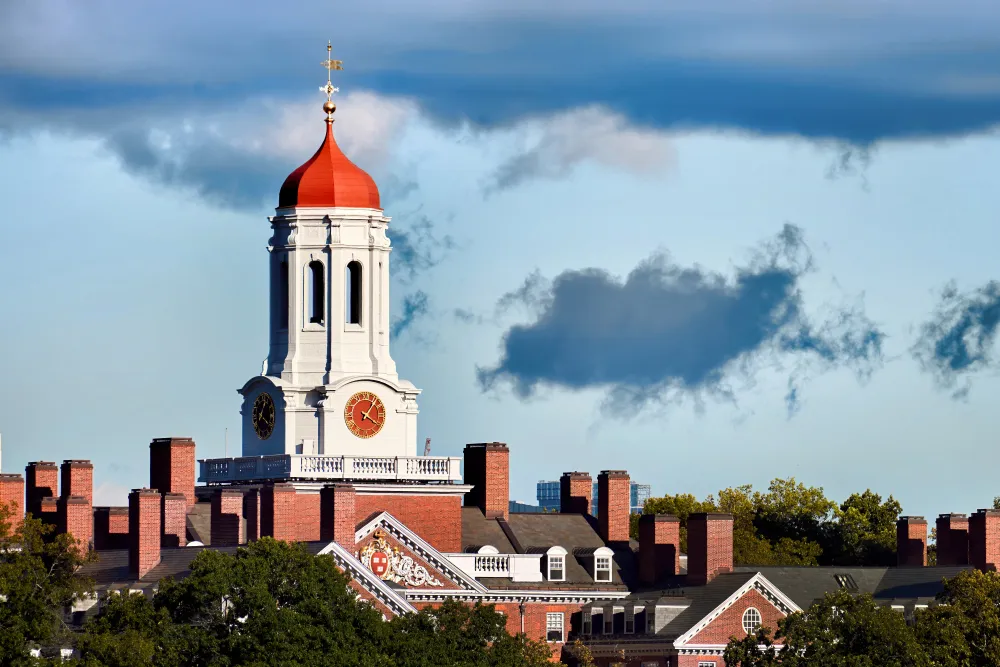
1. Introduction: The Great Academic Shift of 2026
In 2026, the landscape of higher education in the United States is undergoing a remarkable transformation. If we look back just five years, the criteria for “the best” were simple: prestige, endowment size, and age. But today, the story is different.
The integration of artificial intelligence (AI), advanced technology, and a renewed focus on student outcomes has redefined what it means to be a top college.
No longer are rankings based solely on tradition or ivy-covered walls; today, they reflect innovation, affordability, diversity, and, most importantly, future-readiness. This 2,000-word comprehensive guide reveals the best colleges in the USA for 2026, explains the complex criteria behind these new-age rankings, and provides actionable tips to help you choose the right school for a world that is changing faster than ever.

2. Why 2026 Is a Pivotal Year for US Higher Education
The year 2026 marks a turning point for American colleges and universities. We are no longer in the “post-pandemic recovery” phase; we are in the “AI-first” era. Several factors contribute to this monumental shift:
AI and Technology Integration
Campuses are no longer just places with Wi-Fi. In 2026, the best colleges have adopted AI-driven learning tools, smart classrooms, and data-driven student support systems. This doesn’t just enhance the learning experience; it ensures students are fluent in the tools that will dominate their professional lives.
The Evolving Job Market
Employers in 2026 are seeking “future-proof” skills. They want graduates who can adapt, innovate, and thrive in a digital-first world. Colleges that have failed to update their curriculum are falling in the rankings, while those embracing interdisciplinary studies are soaring.
The Affordability Crisis & Response
Rising tuition costs have made affordability the #1 concern for American families. In response, the top colleges of 2026 are those that have pioneered innovative tuition models, expanded need-based aid, and guaranteed a high Return on Investment (ROI).
3. Top 10 Best Colleges in the USA for 2026: An In-Depth Analysis
1. Harvard University (Cambridge, MA)
Harvard continues to lead, not just because of its $50 billion+ endowment, but because of its 2026 Vision Initiative. Harvard has successfully integrated AI ethics into its core liberal arts curriculum.
The 2026 Edge: Their new “Quantum Computing & Society” hub is the first of its kind, bridging the gap between hardcore physics and social policy.
Admissions Trend: Harvard has become more focused on first-generation students, making its 2026 class one of the most diverse in history.
2. Stanford University (Stanford, CA)
Located in the heart of the “New Silicon Valley,” Stanford remains the ultimate destination for entrepreneurs. In 2026, Stanford’s ties to the biotech and green-energy industries are unmatched.
The 2026 Edge: Their “Stanford Accelerator” now allows undergraduate students to earn credits while launching startups.
Campus Life: A heavy focus on “Wellness Tech,” using wearable devices to help students manage stress and sleep.
3. Massachusetts Institute of Technology (MIT) (Cambridge, MA)
MIT is the undisputed king of STEM. However, in 2026, it has climbed even higher due to its leadership in Climate Engineering.
The 2026 Edge: Every MIT student, regardless of major, now takes a mandatory “AI Literacy & Application” course.
Research: Their fusion energy projects are now world-leading, attracting the brightest scientific minds globally.
4. Yale University (New Haven, CT)
Yale remains the gold standard for Law, Arts, and Humanities. In 2026, Yale distinguished itself by refusing to automate the “human” element of education.
The 2026 Edge: The “Yale Humanitas Project” focuses on leadership skills that AI cannot replicate: empathy, negotiation, and ethical judgment.
Alumni Power: Yale’s 2026 networking platform is considered the most powerful tool for career placement in law and politics.
5. Princeton University (Princeton, NJ)
Princeton’s commitment to undergraduate teaching is what keeps it in the Top 5. While other schools focus on graduate research, Princeton ensures its best professors are in freshman seminar rooms.
The 2026 Edge: Their “No-Loan” financial aid package is the most generous in the USA for 2026, making it accessible to middle-class families.
4. The Changing Face of the Ivy League: Still the Gold Standard?
The Ivy League—comprising Harvard, Yale, Princeton, Columbia, UPenn, Brown, Dartmouth, and Cornell—has long been the “North Star” of American education. However, in 2026, the conversation has shifted. It’s no longer just about the name; it’s about the evolution of the elite.
The Reputation Factor
In 2026, an Ivy League degree still acts as a “Global Passport.” For industries like International Diplomacy, High-Stakes Finance, and Academic Research, the prestige of these institutions is unmatched.
Endowments and Resources
With billions in their coffers, Ivy League schools in 2026 have built “Mega-Labs” and “Digital Humanities Centers” that smaller schools simply cannot afford.
The Rise of the “New Ivies”
SEO data and hiring trends show that schools like Johns Hopkins, Duke, and Northwestern are now often preferred over lower-tier Ivies for specific fields like Medicine and Journalism.
Are they worth it in 2026?
The answer is a nuanced “Yes,” but with a caveat: only if you leverage the networking. In 2026, you aren’t paying for the content (which is often available via AI tutors); you are paying for the peer group and alumni access.
5. Best Public Universities in the USA: The “Powerhouses of the People.”
In 2026, the gap between “Private Elite” and “Public Powerhouses” has narrowed significantly. For many students, a top-tier public university is actually a better choice due to the scale of opportunity and industry connections.
University of California, Berkeley (UC Berkeley)
Berkeley remains the #1 public university in 2026. Its location near San Francisco makes it a direct feeder for the world’s biggest tech and biotech firms.
2026 Highlight: Their “Social Impact AI” lab is leading the global conversation on how technology can solve homelessness and climate change.
University of Michigan, Ann Arbor
Known for having the “Largest Living Alumni Base,” Michigan is the king of networking. If you go to Michigan, you can find a job anywhere from Tokyo to New York.
2026 Highlight: Their Ross School of Business has integrated “Blockchain Logistics” into every major, making graduates highly sought after in supply chain management.
Georgia Institute of Technology (Georgia Tech)
If you want to build the future, you go to Atlanta. Georgia Tech has become the “MIT of the South,” but with a much more affordable price tag.
2026 Highlight: Their “Robotics and Autonomous Systems” campus is now the largest in North America.
6. Top Colleges for Specific Majors (2026 Edition)
In 2026, students are advised to choose a department, not just a university. A school might be ranked #50 overall but #1 in your specific field.
A. Best for Engineering & Future Tech
-
Carnegie Mellon University (CMU): Ranked #1 in Artificial Intelligence and Cybersecurity.
-
Purdue University: Leader in Aerospace Engineering. In the era of commercial space travel (2026), Purdue graduates are leading missions to Mars and the Moon.
B. Best for Healthcare & Bio-Sciences
-
Johns Hopkins University: The undisputed leader in medical research. In 2026, their focus is on Personalized Genomics.
-
University of Washington (UW): A rising powerhouse for Biomedical Engineering, heavily funded by the Bill & Melinda Gates Foundation.
C. Best for Business & FinTech
-
Wharton School (UPenn): Fully transitioned into Digital Finance. Every 2026 graduate is proficient in algorithmic trading.
-
NYU Stern: Ideal for merging Finance with Creative Arts or Real Estate in Manhattan.
7. What Factors Truly Determine the 2026 Rankings?
To understand these rankings, we must examine the weighted metrics used in 2026:
-
Graduate Outcome (40%) – Not just employment, but job relevance and salary above the national average.
-
Research Influence (25%) – Frequency of citations in global tech and policy journals.
-
Student Support & Mental Health (15%) – A robust wellness infrastructure is mandatory.
-
Technological Integration (20%) – AI tutoring systems and advanced lab hardware.
8. The Rise of “AI-Ready” Campuses
A defining trend of 2026 is the “Smart Campus.” Schools like Arizona State University (ASU) and Northeastern have outranked older, prestigious schools in innovation categories due to AI adoption.
-
Personalized Learning Paths: Curriculum adjusts in real time based on performance.
-
Virtual Labs: High-fidelity VR labs allow students to conduct experiments anytime.
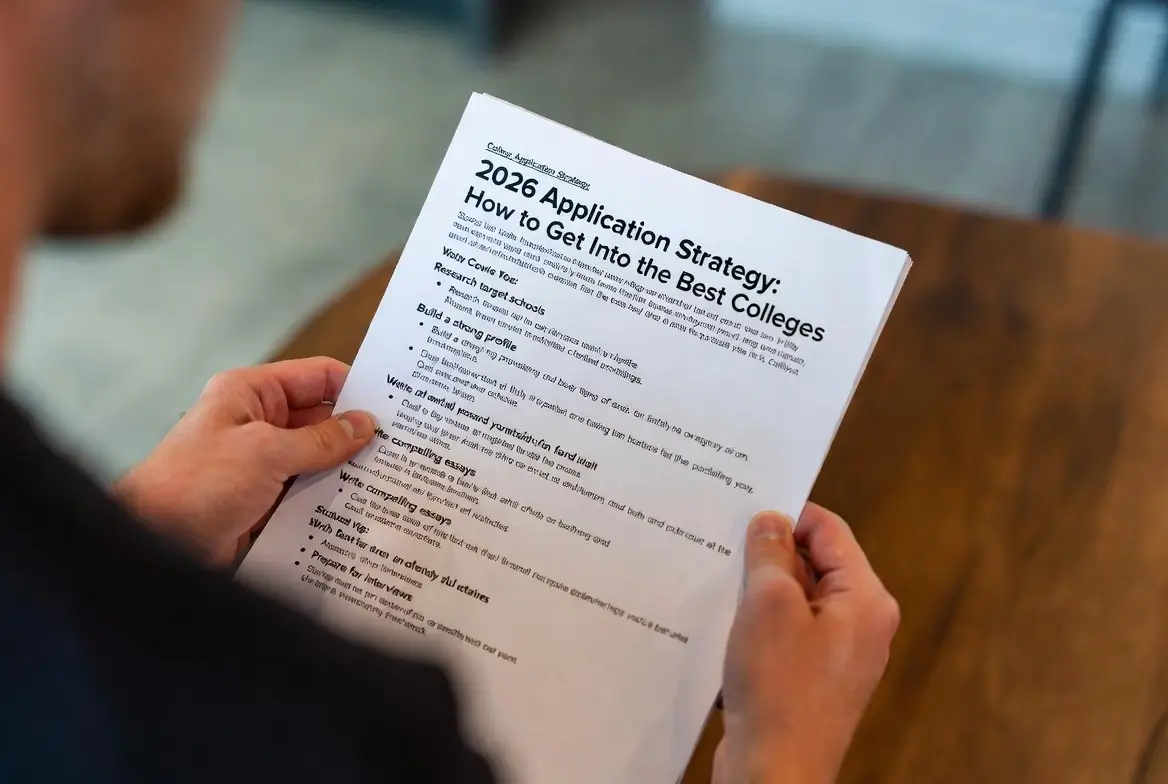
9. 2026 Application Strategy: How to Get Into the Best Colleges
Looking at rankings is one thing—but earning a seat in elite institutions is another. In 2026, the admission process has evolved from purely holistic to evidence-based evaluation.
Beyond the Grades
In 2026, straight A+ grades are not enough. Top colleges look for proof of passion.
If applying for Computer Science, is your GitHub active?
If applying for Literature, have you published in a digital journal?
The Return of Standardized Testing
After the 2021–2024 “Test-Optional” trend, in 2026, top-tier colleges (MIT, Harvard, Yale) reinstated SAT/ACT as mandatory or highly recommended to better evaluate logical reasoning.
AI in Admissions
In 2026, admissions officers use AI tools to check essay authenticity. Therefore, write your own essay. AI-generated essays can be detected and may lead to rejection.
10. Financial Aid and Scholarships: Navigating the Cost in 2026
Education in the USA is expensive, but in 2026, financial aid opportunities will be broader than ever.
-
Need-Blind vs. Need-Aware: Harvard, Princeton, and Yale are need-blind institutions. They do not deny admission based on financial status and cover 100% of demonstrated need.
-
Income Share Agreements (ISAs): Some modern colleges operate on a “Study Now, Pay Later” model.
-
Merit Scholarships for Tech: The government and private sectors have launched record-breaking scholarships for the Cybersecurity and AI fields.
11. Location Matters: The Economic Ecosystem of 2026
A college is not just a building—it is an ecosystem. In 2026, location influences your career by nearly 50%.
-
East Coast (NY, MA, PA): Best for Finance, Law, and Research. Strong traditional networking.
-
West Coast (CA, WA): Hub of Tech, Entertainment, Aerospace. Fast-paced and innovative culture.
-
Texas Triangle (Austin, Dallas, Houston): The new powerhouse of 2026. Lower living costs and abundant job opportunities.

12. Survival Tips for International Students in 2026
If you are applying from outside the USA, keep these three things in mind:
-
STEM Extension: Choose a STEM-designated program to qualify for a 3-year OPT work permit after graduation.
-
Cultural Integration: US campuses in 2026 are highly diverse. Connect with the International Student Office before enrollment.
-
Early Bird Advantage: Admission cycles begin earlier. Completing your application three months before the deadline is key to success.
13. Conclusion: The Final Verdict on USA Colleges 2026
The “Best College” changes every year, but in 2026, the real winner is the student who chooses alignment over prestige.
Harvard may be #1 on paper, but if you want to become the world’s best Automotive Engineer, perhaps Purdue or Michigan is your true #1.
The best institutions are those that have embraced the AI revolution while keeping the human spirit alive. They do not just provide a degree—they provide a future-proof toolkit.
14. Frequently Asked Questions (FAQs) – Deep Dive
Q1: What is the average cost of attending a top US college in 2026?
Total cost (including room and board) ranges from $35,000 (Public in-state) to $90,000 (Private Elite) per year. However, aid packages often reduce this by 50–70%.
Q2: Which university has the best AI research facilities in 2026?
Stanford and Carnegie Mellon (CMU) are currently tied for the top spot in AI research output and industry partnerships.
Q3: Is a Liberal Arts degree still valuable in 2026?
Yes. In the age of AI, Critical Thinking and Ethical Decision Making—the foundation of Liberal Arts—are more valued than basic coding skills.
Q4: How important is college ranking for getting a job?
For your first job, it matters about 30%. After that, your performance, projects, and networking carry 100% of the weight.
Q5: Can I work while studying in the USA in 2026?
On an F-1 visa, you can work up to 20 hours per week on campus. Off-campus work requires authorization, such as CPT.
If you are uploading documents or images for your application, use our Free Image Compressor tool. This will significantly strengthen your internal linking.
1 thought on “Best Colleges in USA 2026 Revealed: Ultimate Ranking”